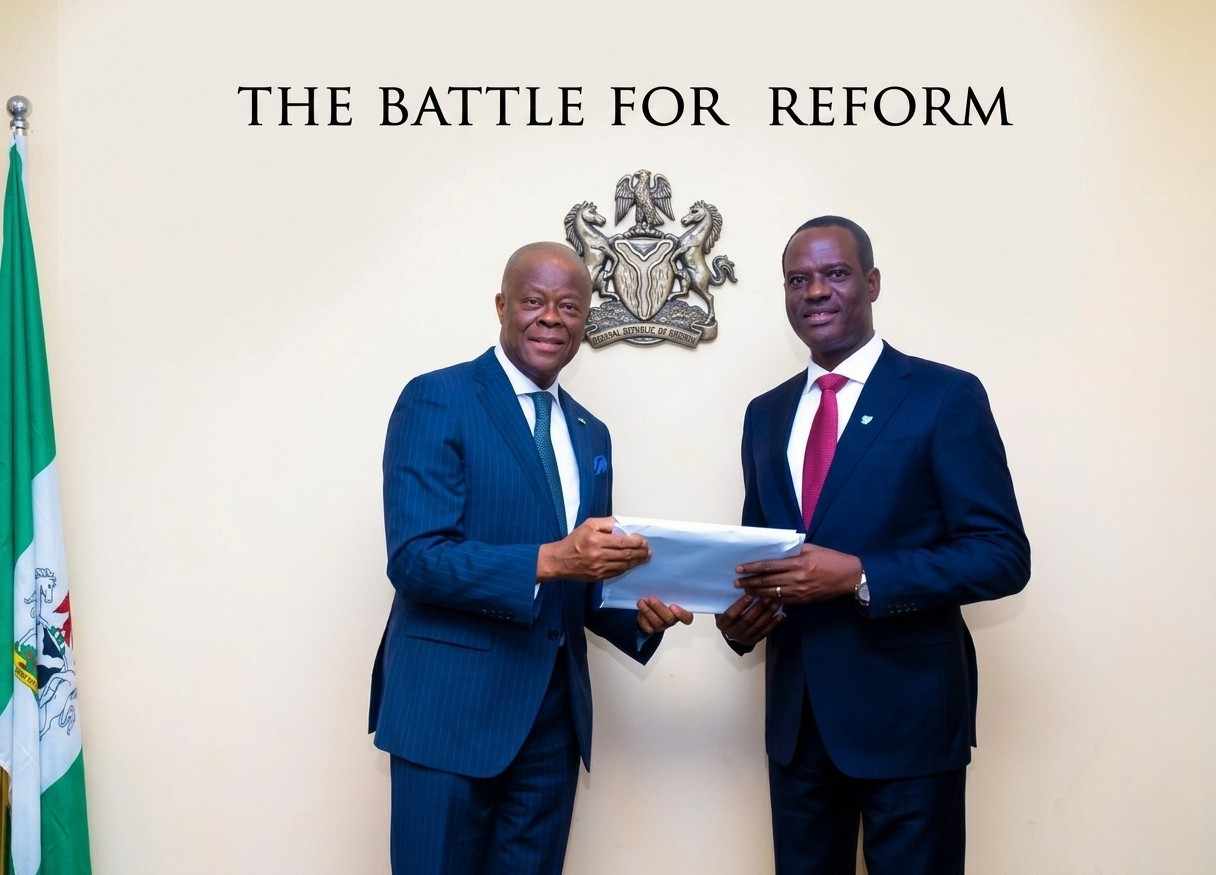
The atmosphere inside Senate Hearing Room 1 on the afternoon of February 12, 2026, was thick with more than just the hum of the air conditioners. It was the sound of a fiscal philosophy colliding with political reality. Wale Edun, then the Coordinating Minister of the Economy, sat at the head of the mahogany table, flanked by the Director General of the Budget Office and the Accountant General of the Federation. Opposite him sat the Senate Committee on Appropriations, led by a unusually combative Chairman. The subject was the ₦58.47 trillion 2026 Appropriation Bill, a document that Edun had touted as the “Budget of Consolidation,” but which the Senate was beginning to view as a “Budget of Miracles.”
For the next five hours, the room became a classroom where the teacher was being graded by students who didn’t like the curriculum. The core of the conflict was not just the total sum of the budget, but the shaky pillars upon which it was built. Edun’s team had projected a revenue performance of 36.5 percent from oil and non-oil sources. To the lawmakers, this felt less like a projection and more like a prayer. They pointed to the harsh reality of the 2024 and 2025 fiscal years, where actual revenue performance hovered around 18 to 22 percent. The Senate’s argument was simple: if you plan to spend ₦58 trillion based on ₦20 trillion of actual income, the ₦38 trillion gap would have to be filled by the very thing Edun promised to stop—reckless borrowing.
The Oil Benchmark Standoff:
At the heart of the 1,000-page document was the oil price benchmark of $75 per barrel and a production target of 1.84 million barrels per day (mbpd). Professor Adekunle, our resident historian, notes that Nigeria has not consistently hit the 1.8mbpd mark in nearly half a decade due to a combination of crude oil theft, aging infrastructure, and a lack of fresh investment in deep-offshore assets. When Senator Sani Musa challenged these figures, Edun maintained a calm, almost professorial demeanor. He argued that the “security architecture” in the Niger Delta was finally stabilizing and that several modular refineries and new oil wells were scheduled to come online in Q1 2026.
However, the “Amina” data desk at GoPolitical flagged a major discrepancy during this session. While the executive was projecting 1.84mbpd, OPEC+ quotas for Nigeria remained tight, and internal leakages continued to drain an estimated 200,000 to 400,000 barrels daily. The Senate committee argued that building a budget on “anticipated security success” was a gamble that the Nigerian people could no longer afford. They proposed a more conservative benchmark of 1.6mbpd, which would have slashed the budget’s expenditure side by nearly ₦4 trillion. Edun’s refusal to budge on this figure was the first visible crack in his relationship with the National Assembly.
The “Optimism-Bias” and the Public Purse:
The Senate’s interrogation then pivoted to the non-oil revenue targets. Edun had projected a massive surge in Corporate Income Tax (CIT) and Value Added Tax (VAT) collections, citing the ongoing automation of the Federal Inland Revenue Service (FIRS). The lawmakers, however, voiced the concerns of their constituents. With the removal of petrol subsidies in 2023 and the subsequent inflation of 2024–2025, the Nigerian manufacturing sector was in a state of “controlled contraction.” Many small and medium-sized enterprises (SMEs) had shuttered, and the ones remaining were struggling with high energy costs and a volatile exchange rate.
“How do you tax a ghost?” one Senator famously asked during the hearing. The committee argued that the aggressive revenue targets would force the FIRS to become “predatory,” further stifling the very economic growth the budget was supposed to promote. Edun’s defense was that the “broadening of the tax net” would target the informal sector and high-net-worth individuals who had previously evaded their obligations. But to the Senate, this sounded like a repeat of the 2025 promises that had failed to materialize into actual treasury inflows.
The Social Contract in Jeopardy:
By the fourth hour of the hearing, the conversation shifted from numbers to people. The 2026 budget allocated significant portions to “Debt Servicing” and “Recurrent Expenditure,” leaving the “Capital Expenditure” (the money meant for roads, hospitals, and schools) at a mere 25 percent of the total spend. This was the emotional trigger for the lawmakers. They argued that their constituents were not seeing the “gains of the reform” that Edun frequently mentioned in his international investor briefings.
The tension reached a peak when the discussion turned to the National Minimum Wage implementation. The Senate pointed out that while the budget increased the wage bill, it did not provide a clear funding mechanism for the states, many of which were already on the verge of bankruptcy. Edun’s insistence on “fiscal discipline” was interpreted by the committee as “social apathy.” This hearing was the moment the “Architect of Reform” became, in the eyes of the Senate, the “Author of Austerity.”
The Unspoken Divide:
What wasn’t said in the hearing room was perhaps more important than what was. Behind the technical debates over “Exchange Rate Pegs” and “GDP Deflators” was a deep-seated political anxiety. 2027 was appearing on the horizon, and the National Assembly knew that an unfunded budget would lead to abandoned projects in their districts. Edun, committed to his vision of a “lean, efficient state,” was blocking the very “constituency projects” that lawmakers needed to secure their political futures.
As Edun packed his leather briefcase at the end of the session, the headlines were already being written. The Senate had not rejected the budget, but they had officially “queried” its soul. This February hearing set the stage for a three-month cold war between the Ministry of Finance and the National Assembly. It was the beginning of the end for the Edun era, as the Presidency began to realize that their “Star Technocrat” was becoming a political liability. The “Budget of Consolidation” had become a battleground, and for the Nigerian citizen watching from the sidelines, the only certainty was that the price of governance was about to go up.
Leave a Reply